



Chestnut's Supportive Housing Program
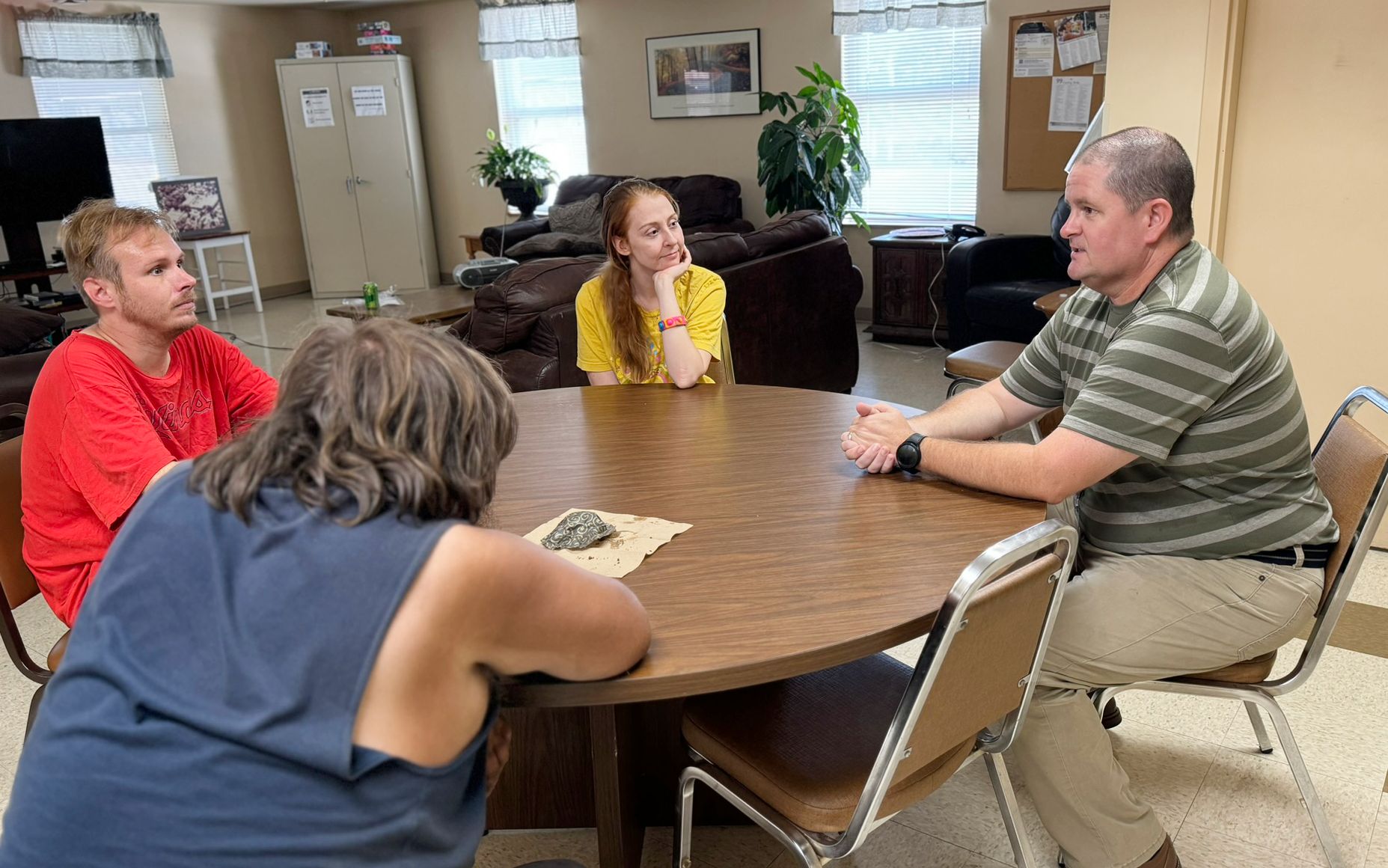
Twenty-four tenants call the Mainstay Center home who may otherwise be unhoused. A dedicated team of clinicians look after the facility, which is one of a handful of supported housing facilities run by Chestnut Health Systems™.
Chestnut housing programs aim to provide individuals with mental illness or co-occurring disorders access to safe, suitable, and affordable housing; while also helping them develop the skills they need to achieve greater self-determination. At the heart of the operation are the clinicians, who help residents achieve their goals to live independently.
The position offers great potential to find fulfillment, but requires thick skin, a listening ear, and keen boundary setting. The clinicians are there to support the residents in their recovery. They are skilled at connecting the tenants to resources and helping them navigate the complexities of the health care system. They manage medications. They tackle the administrative duties associated with property management. They even accompany tenants to appointments and on various outings such as to the movies or the zoo.
There is also an unwritten duty. Many tenants lack a close family dynamic. Clinicians fill that role.
The high level of difficulty can lead to high turnover and recruitment challenges. For the right individual, the apartment building can feel like a second home, with all the highs and lows.
“So, I think how I got here -- I think the profession chose me,” said Clinician Kimberly Granger. With a master’s in counseling and 25 years in human services, she’s been with Chestnut for six and a half years.
“I didn’t find mental health. Mental health found me,” said Clinician Nedra Thomas-Green, who also has a master’s degree and has been with Chestnut for 24 years.
The profession seeks out people who have the heart for the job. In the medical field, they refer to it as “bedside manner,” according to Thomas-Green – a “humanistic approach” fueled by empathy.
“When I work with the tenants here, I think about my family: This could be my sister, this could be my brother. So, I don't care how you look; I don't care what color your skin is; I don’t’ care what your religion is; I'm going to work as hard for you as I can,” she said.
A day in the life

It’s a quiet day at the apartment building. A couple of residents gather around a table in the community room chatting with the staff. Upstairs, one client cracks his door open and presents Thomas-Green with a freshly baked brownie. Clinician David Mitchell prepares to host an anger management group therapy session later that night.
“If you come into a job like this, you’ve got to be here for the people,” Mitchell, an ordained minister with two years under his belt at Chestnut, said. “Those who just want to cash a check may get overwhelmed by all the things that people with mental health diagnosis tend to do -- being on a larger range of emotions on a regular basis.”
When the tenants don’t feel well, they might try to push your buttons. You must learn to “turn off your buttons,” according to Mitchell. It takes a healthy ability to be self-aware and de-escalate crisis situations rather than relying on the police for every problem.
One of the difficult parts of the job is the understanding that while you can point the tenants in a certain direction, moving forward is always their choice. They are encouraged to take care of themselves and offered help, but no one can be forced to take a certain path.
For example, one client has been diagnosed with lung cancer and is refusing treatment, which weighs heavily on Thomas-Green. Individuals with mental illnesses often exhibit comorbidities, and a big part of the job is encouraging wellness.

“I feel helpless in not being able to convince this beautiful person to do treatment,” she said. “But they have to choose their own journey.”
Substance use adds to the complexity of many journeys. Granger recalls administering the opioid overdose reversal drug Narcan® several times on a client.
“You have no feelings in that moment. You’re just trying to take care of them,” she said, adding that the pain and frustration came after. The darkness has since lifted.
“When the client first came here, it was difficult to not just see their substance use. Now they’ve been substance-free for more than 19 months,” she said. “And I see them. I see their personality. I see they have food likes and dislikes. I see them smile so much more. And I’m proud of them.” The client has credited Chestnut with saving their life.

These are the achievements that keep the Mainstay staff going.
“It's a thankless job, at times, in the fact that the tenants aren't in a place to give you accolades and attaboys and pats on the back. So, you have to look at milestones and progress in their lives,” Thomas-Green said.
Progress may seem slow at times, but success stories recharge the spirits of the staff. Some tenants even return to the greater community and are successful.
“The job chose me”
The job description is demanding. Success can be difficult to gauge. But there is a reason many stay with the job for more than 20 years.
“What I like best about my job is that it is different every day. You have duties you have to do. For example, you must turn in shift reports every day. But there’s never two shift reports alike,” said Granger.
When the weight of the role becomes heavy, the clinicians look to each other.
“I don't want anybody to think I'm a superwoman, because I am not,” Thomas-Green said. “I rely on the people I work with. On those days when I can't be superwoman -- when I can’t deal with it -- when my cape has a flaw in it-- they come in to save the day for me.”
She continued, “With the team approach, everybody has their strengths, and everybody has their way of dealing with tenants, which makes us successful as a unit,” said Thomas-Green.
There is always a need for kind-hearted people to devote their career to helping others and join a “successful unit.” Preferred applicants meet one of the criteria below, but anyone is encouraged to apply.
- High school diploma or equivalent plus five years’ social service, admissions, scheduling, screening, or peer experience
- High school diploma or equivalent and be a Certified Recovery Support Specialist or certified Peer Recovery Specialist
- Bachelor’s degree in related field
Think you have what it takes? Do you think the profession has chosen you or may choose? Apply at chestnut.org.
 About the Author
Author
Chestnut Health Systems
Title
Bio
Chestnut offers a comprehensive scope of behavioral health and human services in Illinois and Missouri. Our professional and experienced staff is committed to providing high-quality care and services to the communities we serve. From drug and alcohol addiction treatment facilities (residential and outpatient) to primary care medical homes, to a research institute, Chestnut continuously works to achieve its mission to make a difference and improve quality of life through excellence in service.
If you or someone you love needs help, we can help. It all starts with a phone call. In central Illinois call 888.924.3786 and in southern Illinois/Meto East area call 618.877.4420.