




Your Brain on Winter: The Science of Seasonal Sadness

As the sun sets earlier, many find their mood darkens as well.
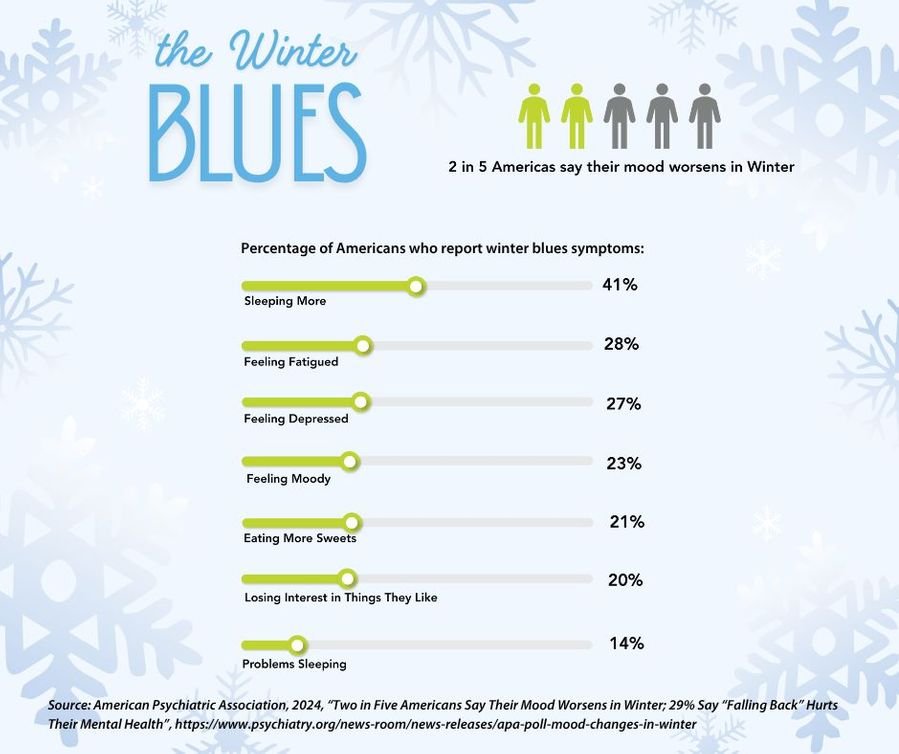
The gray and cold of winter presents a significant challenge to millions. Around 40 percent of Americans report some negative mood changes in winter, often referred to as the “winter blues”. Symptoms include sleep issues, fatigue, and sadness.
About five percent of adults in the United States experience Seasonal Affective Disorder (SAD), which is considered a major depressive disorder according to the American Psychiatric Association. SAD can be debilitating and cause suicidal thoughts.
There is a lot we still don't understand about seasonal sadness. While severity varies, research suggests light exposure plays a major part. Studies have shown SAD is more common the further you get from the equator where the days grow shorter. Shorter days, along with less outdoor activities, limit the amount of natural light entering the eye.
Your biological clock
You are born with an innate sense of time known as your biological clock, a set of genes located in cells throughout the body.
The genes are all orchestrated by the master clock, a cluster of cells in the brain. Light tells your body what time it is by entering through the eye and sending signals to your master clock. Your master clock regulates circadian rhythms.
Circadian rhythms are the natural patterns of physical, mental, and behavioral changes programmed into every cell of most living things so they can thrive within the 24-hour cycle.
Circadian rhythms control when you feel tired based on the time of day, triggering changes in the body. For example, the circadian rhythms cool the body down 1 to 2 degrees Fahrenheit during night time hours to prepare for sleep. The body warms up during the daytime hours, which allows you to be more alert.
Even if you work third shift, your body follows these cues because circadian rhythms are controlled by light and not life circumstances. Even blind people still retain the ability to sense light and can experience seasonal sadness.
When every cell is tuned to the 24-hour day, anything that throws these patterns off is going to influence the body, as we see in jet lag, late shifts, or artificial light at night. Disruptions to circadian rhythms are serious and have been linked to heart disease and cancer. Our modern world challenges our ancient programming, leading to a host of mental health struggles.
Sleep disruptions alone are enough to spoil your day. And it’s not just about feeling tired -- circadian rhythms are linked with hormones that help regulate mood.
As the sun peeks through in the morning, your master clock uses circadian rhythms to send messages to the pineal gland to decrease production of melatonin, a hormone that helps you feel sleepy. Dimmer light in evening increases the production of melatonin, which also helps regulate mood.
Sunlight stimulates the production of vitamin D, which aids in the production of serotonin and other feel-good chemicals like dopamine and endorphins. What else helps generate serotonin? Carbs. This is why millions increase carb consumption in winter, particularly sweets. This can lead to weight gain.
You may be asking the question: Why haven’t humans evolved to take the shorter days of winter into account? Research has explored this question.
Negative emotions wouldn’t exist unless there was some utility. For example, anxiety can be useful to help humans avoid danger. Low energy and motivation could have been beneficial during long winters with limited food and harsh weather to help encourage remaining sheltered and avoiding risks.
Significant changes in human history provide insight. Humans have not had enough time to adapt to a more indoor lifestyle and artificial light at night, or even the migration to northern latitudes.
From a scientific perspective, it makes sense that modern life can throw our bodies out of sync. That doesn’t mean we are powerless against the winter blues.
Treating the winter blues
There are things you can do to help:
- Light therapy is a popular treatment and involves sitting in front of a light therapy box that bathes you in bright light (filtering out UV rays). Studies report positive results when used in the morning for a minimum of 20 minutes.
- When there is a deficiency, Vitamin D supplements can help stimulate the production of serotonin.
- Talk therapy can help with the emotional effects of seasonal sadness.
- Always maintain a healthy diet and exercise routine.
- In some cases, antidepressant medication may be considered.
Winter getting to you? We can help you determine the right course for you and provide talk therapy or mental health medication management (psychiatry) if appropriate. Request an appointment online or call 888.924.3786.