




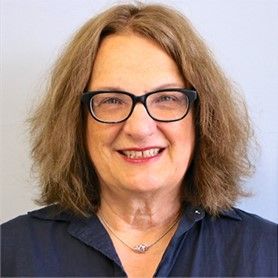
Senior Research Scientist
NIMH Postdoctoral Fellow University of California—Los Angeles, 1986–1989 (Mental Health Services Research), University of California—Santa Cruz, PhD, 1985 (Social Psychology), and University of California—Los Angeles, BA, 1977 (Psychology)
Specialty areas: SUD treatment access and utilization; SUD treatment effectiveness; SUD and mental health comorbidity; gender and SUD treatment; longitudinal evaluation of substance use treatment and trajectories
Dr. Christine E. Grella is a Senior Research Scientist at Lighthouse Institute (2017–present). She held a faculty appointment in the Department of Psychiatry and Biobehavioral Sciences at the University of California—Los Angeles from 1992–2018 (currently Professor Emerita) and was Director of the UCLA Integrated Substance Abuse Programs (2012–2017). She received her doctorate in Social Psychology from the University of California—Santa Cruz in 1985. Dr. Grella conducts research on substance use and treatment outcomes among youth and adults, with a focus on gender differences and health disparities in access to and outcomes of treatment. Her research has examined service access, utilization, and outcomes of participation in multiple service delivery systems, including substance use disorder treatment, mental health, child welfare, health services, HIV services, and criminal justice systems. Dr. Grella has led several longitudinal cohort studies, over a dozen evaluation studies of SAMHSA-funded treatment interventions for individuals with substance use and/or mental health disorders, and epidemiological studies using national survey data on treatment need and utilization. She serves on several scientific and community advisory boards related to behavioral health services and is a frequent reviewer for NIH/NIDA.
Selected Publications:
Grella, C. E., Ostlie, E., Watson, D. P., Scott, C. K, Carnevale, J., & Dennis, M. L. (2022). Scoping review of interventions to link individuals to substance use services at discharge from jail. Journal of Substance Abuse Treatment. 108718. PMCID: PMC9167253. https://doi.org/10.1016/j.jsat.2021.108718
Grella, C. E., & Stein, J. A. (2013). Remission from substance dependence: Differences between individuals in a general population longitudinal survey who do and do not seek help. Drug and Alcohol Dependence, 133, 146–153. PMCID: PMC3786033. https://doi.org/10.1016/j.drugalcdep.2013.05.019
Grella, C. E., Needell, B. N., Shi, Y., & Hser, Y. I. (2009). Do drug treatment services predict reunification outcomes of mothers and their children in child welfare? Journal of Substance Abuse Treatment, 36(3), 278–293. PMCID: PMC2848488. https://doi.org/10.1016/j.jsat.2008.06.010
Selected Grants and Contracts:
Multiple Principal Investigator: Improving Retention Across the OUD Service Cascade Upon Re-entry from Jail Using Recovery Management Checkups Adaptive (RMC-A) (MPIs: Dennis, Grella. NIH/NIDA: UG1-DA050065, 2019–2024)
Principal Investigator: Recovery Initiation and Management after Overdose (RIMO) Experiment (NIH/NIDA: R21/R33-DA045774, 2017–2023; NCE: 2024)
Principal Investigator: Gender Differences in a Long-term Follow-up of Opiate Users (NIH/NIDA: R01-DA015390, 2004–2010)
Co-Investigator: A Natural History of Narcotics Addiction: A 33-Year Follow-up (PI: Hser. NIH/NIDA: R01-DA09169, 1995–1999)
Appointments and Awards:
Professor-in-Residence, Department of Psychiatry and Biobehavioral Sciences, Semel Institute for Neuroscience & Human Behavior, University of California, Los Angeles: 1992–2018
Related Links:
Christine Grella Google Scholar
Justice Community Opioid Innovation Network (JCOIN): Improving Retention across the OUD Service Cascade upon Reentry from Jail using Recovery Management Checkups (RMC-A) Experiment
Jails provide an optimal setting for intervening with individuals with opioid use disorders (OUD), given the high volume of offenders with OUD, and their high risk of relapse to opioids following their release to the community. It is imperative that individuals with OUD are linked to community-based medication assisted treatment (MAT) upon their re-entry, as well as receive support for their ongoing treatment retention and recovery.
Recovery Initiation and Management after Overdose (RIMO) Experiment
Emergency responders, including paramedics, fire fighters, and police, routinely come into contact with individuals who have overdosed and play a critical role in administering naloxone to reverse opioid-related overdose. However, mechanisms to link these individuals to medication-assisted treatment (MAT) following an overdose are lacking. This study targets individuals in Chicago who have received naloxone administered by first responders within the past week to reverse an overdose, but who have not entered into MAT.
Allen, C. B., Dennis, M., Mouton, C., & Grella, C. E. (In press). A comparative analysis of the most common causes of mortality and substance use by age. Public Health.
Bell, J. S., Dewey, J. M., Watson, D. P., Johnstone, C., Palmer, J. S., Kurz, R., & Grella, C. E. (2026). Impact of social determinants on opioid use disorder treatment engagement after release from jail: A case note content analysis. Addiction Science & Clinical Practice, 21. https://doi.org/10.1186/s13722-026-00666-2
Kahn, J. H., Hart, M. K., Watson, D. P., Allen, C. B., Singh, R. R., Grella, C. E., & Dennis, M. L. (2025). Recent incarceration and minoritized racial status as barriers to the effectiveness of Recovery Management Checkups. Substance Abuse Treatment, Prevention, and Policy, 20(53). https://doi.org/10.1186/s13011-025-00684-4
Kahn, J. H., Hart, M. K., Watson, D. P., Allen, C. B., Singh, R. R., Grella, C. E., & Dennis, M. L. (2025). Recent incarceration and minoritized racial status as barriers to the effectiveness of Recovery Management Checkups. Substance Abuse Treatment, Prevention, and Policy, 20(53). https://doi.org/10.1186/s13011-025-00684-4
Watson, D. P., Dennis, M. L., Messmer, S., Waller, R. C., Kang, N., & Grella, C. E. (2026, April 24). Supporting ASAM’s Level 1.0 Remission Monitoring through Recovery Management Checkups [Workshop session]. ASAM 57th Annual Conference, San Diego, CA.