


Peer Specialist Shares Story
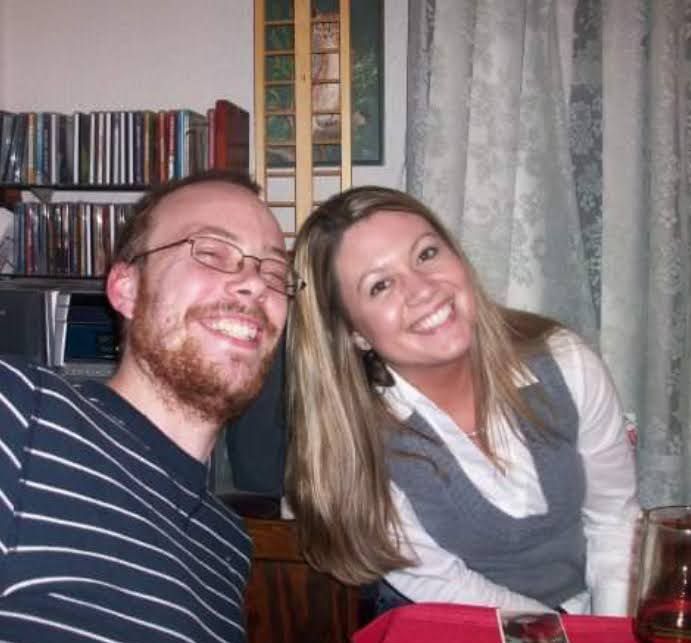
Ryan Hill once woke up with a sheet over his head.
The future Chestnut Peer Specialist / Clinician peeled the sheet off to reveal shocked nurses. He had been dead for two minutes.
Not a lot of people get a second chance. Hill has done a lot with his.
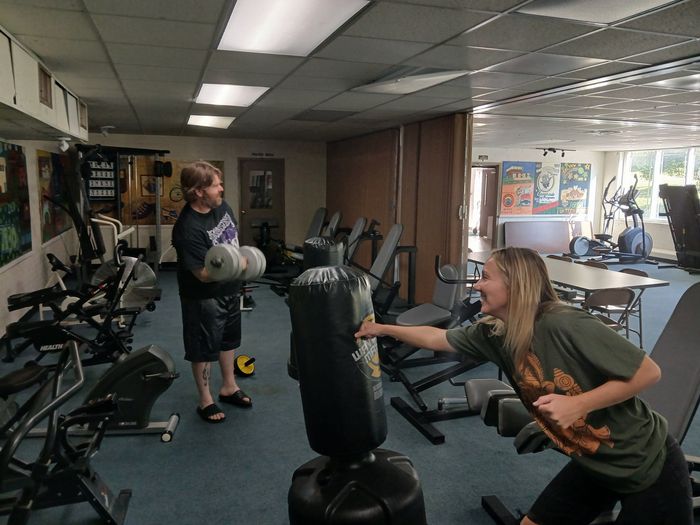
Client Doug Messmer and peer Miranda Hyde take part in Hill’s fitness class.
For example, he has helped Chestnut establish a new location in De Soto, MO.
"We're creating this beautiful atmosphere in the forgotten little community. We've been at this location since May, and I've already helped connect three people to treatment,” said Hill. “We have someone walk in almost every day with some sort of need that we can help them with.” He added that he couldn’t do this work without Miranda Hyde, his fellow peer.
Another thing he has done is create a unique experience for Chestnut clients with a fitness class meets therapy session called Moving with Intention.
"There are so many different pathways to recovery and one of the things that helped me out personally was yoga. And it wasn't strict yoga. It was old man yoga in my living room where I stretch and look like I don't know yoga because I'm stiff," he said. "I found that if I do that for 35, 40 minutes, I will become really emotional. I will feel my emotions flood."
Hill connects stiff jaw, shoulders, or muscles with the suppression of thoughts and encourages clients to talk things out while stretching.
"I've found great success, especially in adult males because I feel like they don't even understand they're in a therapy session." The class culminates in a mediation session, which teaches the participants to be aware and in charge of their thoughts.
It's the kind of wisdom only a peer recovery specialist can provide—tips and tricks from someone who has been there and come out on the other side. One valuable lesson Hill learned was as an adult male, he was allowed to be vulnerable.
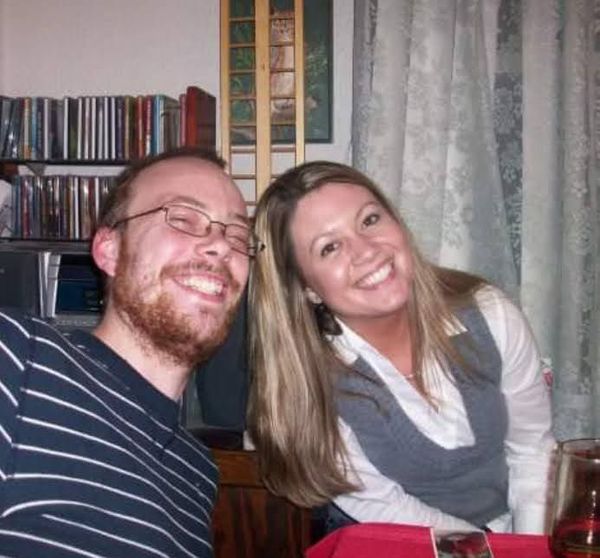
Ryan Hill and his sister, whose death “lit a fire under” him.
Hill's story is one with many twists and turns. His rocky relationship with substances began in his teenage years after losing his grandmother and aunt within a short period. There were times when he was able to control his more destructive impulses. He built a successful career at a bank, supervising 20 people. At the same time, he was teaching guitar lessons to about 40 kids each week.
"It was too much for me and I eventually ended up relapsing. From there, I went downhill so fast. At 30, I was very successful. I had a 401k and kids who were happy and healthy. By 32, I was homeless."
A moment of clarity came while he used drugs with friends at a sober living home in Wood River, IL.
"In that house, I was sitting there with these people, and I heard a voice. It said, 'Get up. I got you.’ And I did."
He eventually found work on a farm, developing an exceptional work ethic and relearning how to fulfill responsibilities. He reunited with his wife and children. In another twist, the family suddenly moved to Virginia to help his sister in her last days of fighting cancer.
About a week before her death, his sister opened up about how difficult it was to watch Hill struggle and not be able to support him because she didn't understand, showing him unsent emails.
"One day, I went to work, and I felt something wasn't right, so I drove home and right as I got there, she passed away and I was able to pick her up, carry her off to bed, and say goodbye," he said. The loss of someone who had so much potential "lit something underneath" Hill.
"All these people who are struggling with substances are suffering so badly and they feel so alone, and they think everyone's bailing on them. But the reality is we aren't equipped [to help them]."
He started doing peer work in Virginia and knew he found his calling. Peers advocate for individuals throughout their treatment and recovery journey, empower them to build life skills, inspire through their personal recovery story, and connect them with resources.
But there was still something missing.
"I was helping a lot of people, but I'm from the Midwest," he said. "So, I made a decision to come back and spread the news of what I learned out on the coast."
He started at Chestnut in October of 2023. He currently works in Treatment Court, a program that offers individuals facing drug-related charges a chance to complete treatment and rehabilitation instead of serving traditional jail time.
Peers help people in their darkest hours, often when they have no one else to turn to.
"Sometimes, I just needed to speak to someone to get it out of my head. And one of the cool things about a peer is that a peer doesn't give advice. A peer doesn't tell you what to do. A peer is basically a reflection of your inner dialogue," he said. "I've had great things happen in my life. They haven't experienced their great things, their miracles, yet. I promise them they're going to come. They just have to grin and bear it a little bit and if they need to come hang out with me, they can and if they want to cry with me, they can."
Located at 400 Boyd St., the De Soto location has walk-in hours Mondays, Tuesdays, and Thursdays from 9 a.m. to 1 p.m., Wednesdays from 9 a.m. to 5 p.m., and Fridays from 9 a.m. to noon. Hill's fitness class / support group is every Wednesday from 7:30 to 8:30 a.m. and is open to Chestnut clients of all fitness levels. Call Hill at 636.487.2242 for more information.
Research (here, here, here, and here, for example) has shown that peers can aid recovery and improve outcomes. What the Chestnut website for careers for peers or call 888.924.3786 to see about receiving peer support.